Landscaping Georgetown, for small yards and side passages
Georgetown is small blocks and old cottages, and most backyards here are measured in steps. You get a side passage, a front strip and a backyard that all work hard, three minutes up the road from Fernline Landscapes' yard in Broadmeadow.
When your backyard is the size of a room, every metre has to earn its place. Design it like a room.
Georgetown is one of Newcastle's smaller suburbs, home to about 2,070 people at the 2021 census, with Moate Street through the middle and Waratah station and village close by. Its cottages went up on narrow lots in the late 1800s and early 1900s for working families, many have since been extended at the back, and the garden is what's left around the edges: a front strip, a side passage and a short backyard.
A small suburb of small yards
Georgetown is a small suburb, and its yards match. The cottages were built for workers on narrow lots, and over the years most have been extended, often at the back. What's left for you is usually a front strip a couple of metres deep, a side passage and a backyard you can cross in a few steps.
A small yard still needs careful planning, because every decision shows: where the bins live, which way the clothesline folds, whether the paving lines up with the back door. Get those right and a four-metre backyard works like an extra room. Get them wrong and it's just the way to the shed.
The house matters too. A Federation cottage with a new glass extension at the back has two faces, and the garden can tie them together: an older-style front strip facing the street, and a plain, modern courtyard off the new kitchen. Neither has to pretend to be the other.
Getting in and out
The biggest practical question on a Georgetown job is access. Many houses have a single side passage, sometimes narrowed by a meter box or a downpipe, and some have hardly any side access at all. That's planned for from the first visit: equipment that fits a narrow gate, motorised barrows instead of a bobcat, and materials ordered in loads that are used the same day, so nothing sits on the footpath overnight.
Being three minutes away in Broadmeadow makes that easier. Soil, gravel and pavers can come in small loads through the day, rather than as one big drop that blocks your street and your neighbour's driveway.
Fewer checks, more design
Georgetown sits outside the City of Newcastle's heritage conservation areas, and the NSW Planning Portal maps show it outside any mine subsidence district and clear of bush fire prone land. For most garden work, that means fewer extra checks than in Hamilton or the western suburbs. Your address still gets checked, and the state's exempt development rules still apply to walls and fences, but the work can start with your yard rather than the paperwork.
That leaves more of the effort for the design itself. In a small yard, that means fewer, larger pavers in one material, a single small tree for shade, and planting along the edges where it doesn't take floor space. The aim is a yard that's easy to keep and that you'll actually use every day.
What we build in Georgetown
Our backyard is four metres deep and all you could reach it by was the side passage. They barrowed everything in, and now the paving runs level from the kitchen doors to the back fence.
Claire, Georgetown · Sample review
01
Side passages that do a job
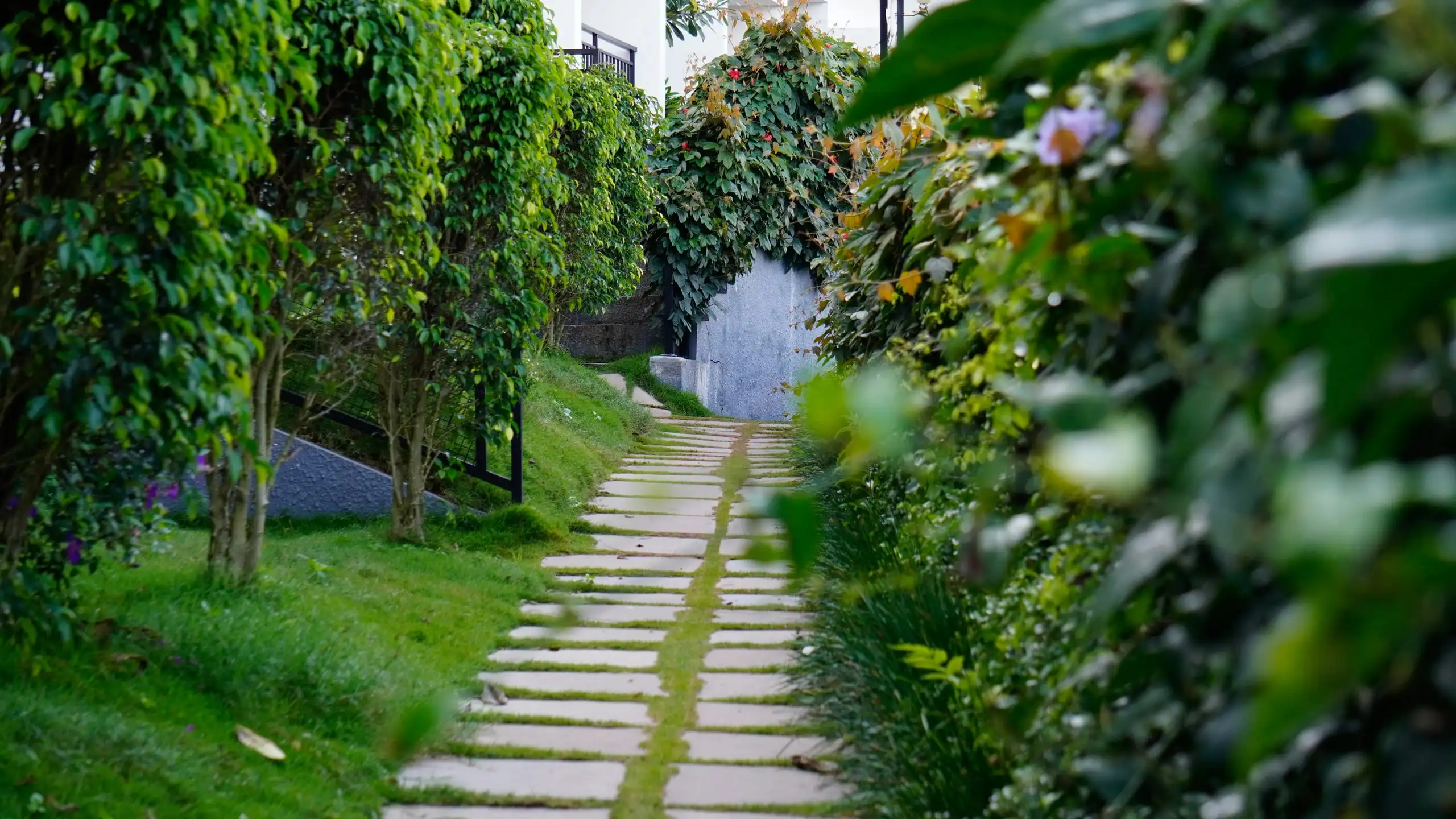
The strip down the side of the house turned into useful space: a firm, level path, a screened spot for bins and storage, and narrow planting or climbers on the fence.
What's left after a rear extension, often only a few metres deep, planned as one space with the new doors: paving level with the threshold, one tree for shade and beds along the edges.
Front yards a couple of metres deep between the verandah and the footpath, given a clear path, low planting and somewhere for the bins that doesn't crowd the house.
Only if there's truly no other way in. Most Georgetown houses have a side passage, even a narrow one, and that's enough for motorised barrows and a small machine. Where everything must come through the house, floors and doorways are covered, and the job is planned so materials go in as few trips as possible.
Our backyard is about four metres deep. Is it worth landscaping?
Yes, a small yard gives you the biggest change per square metre. Four metres is room for paving level with your back door, a small table or a bench, a narrow bed of planting and one small tree. Fewer, larger pavers in one material make the space read bigger than it is.
What will grow in a shady side passage?
More than you'd expect. Clivia, liriope, ferns and Philodendron Xanadu all cope with shade and a narrow bed, and star jasmine on a wire trellis covers a fence without taking floor space. Plants in a side passage need good soil and mulch, because the eaves stop most of the rain reaching them.
Can we have real lawn in a yard this small?
You can, but a tiny lawn under a dog and a clothesline often wears down to dirt. For very small yards, paving or decomposed granite with planting usually works better. If you want grass, a shade-tolerant buffalo copes best in a narrow, part-shaded Georgetown yard, laid on a proper soil base.
Where should the bins, the clothesline and the tap go?
They get planned first, because in a small yard they take the space the garden needs. A fold-down line on a side wall, a screened bin bay near the front gate and a tap where the hose actually reaches the beds free up the middle of the yard for you to use.
Our extension builder left the backyard a mess. Can you start from there?
Yes, it's a common starting point here. The builder's rubble is cleared, the levels around the new floor are checked so water falls away from it, and any new downpipes are connected before paving goes down. If you can, bring us in before the builder pours a path, so the levels are set once.
Send us your garden
A few photos and a rough idea is enough. We'll ring to book a free site visit, then send a fixed quote with a drawing.