Fernline Landscapes lays patios, paths and driveways in natural stone, porcelain and concrete pavers for homes across Newcastle and Lake Macquarie. Every job is laid on a compacted base and graded so storm water runs away from your house, not under your back door.
Most paving problems show up a year or two after the job is finished. A paver rocks when you step on it, a dip holds a puddle after rain, or the edge along the lawn starts to drop. Each of those starts in the ground under the pavers, which is where your money matters most.
We dig out to firm ground, lay a road base and compact it in layers with a plate compactor until it stops moving. Then a screeded bed of sand or mortar, depending on the paver, and a fixed edge so the outer row can't creep into the garden. On a driveway the base goes deeper and the pavers are thicker, because a car puts far more load on a small patch than people do.
Stone, porcelain or concrete pavers
Natural stone like sandstone, bluestone and travertine suits older houses in Hamilton and Georgetown, where brick and stone are already part of the street. Every piece is a little different, and it wears in rather than wearing out.
Porcelain is the choice for a clean, modern look and a surface that's easy to keep clean. It's thin and dense, takes very little water and holds its colour in full sun. We use the 20mm outdoor grade with a textured finish, so it isn't slippery when it's wet.
Concrete pavers cost the least and come in plenty of sizes and colours. They're a good fit for side paths, bin areas and big areas where the budget has to stretch.
At the site visit we bring samples, so you can see each one against your house and your light before you choose.
Where your water goes
A paved area doesn't soak up rain, so every drop has to go somewhere. We set a gentle fall across the whole surface, away from the house and towards the garden or a drain. Where the paving meets the back door, a strip drain catches what's left before it reaches the sill. On a big area the water is piped to a pit or a legal discharge point, not just pushed onto your neighbour's side.
That fall is so slight you won't notice it when you walk on it. You'll notice it the first time a summer storm comes through and the patio is dry again in half an hour.
Clay out west, sand on the coast
The ground in Maryland, Fletcher and Wallsend is mostly clay. It holds water, swells when it's wet and shrinks in a dry spell, so we dig deeper there, add an ag drain under the base where water lies, and keep moisture away from the subgrade. Around Belmont and the eastern side of Lake Macquarie the soil is sandy. It drains well but moves sideways, so solid edging matters more than depth.
We check the soil at the site visit with a test hole, rather than guessing from the suburb.
Patios, paths and driveways
A patio by the back door gives you somewhere for a table and chairs that doesn't turn to mud. A path from the gate to the clothesline or the shed means you stop wearing a track through the lawn. A paved driveway or parking pad replaces cracked concrete or gravel that ends up in the garden. Many jobs are all three, laid in one material, so the yard reads as one piece, with new turf or planting filling what's left.
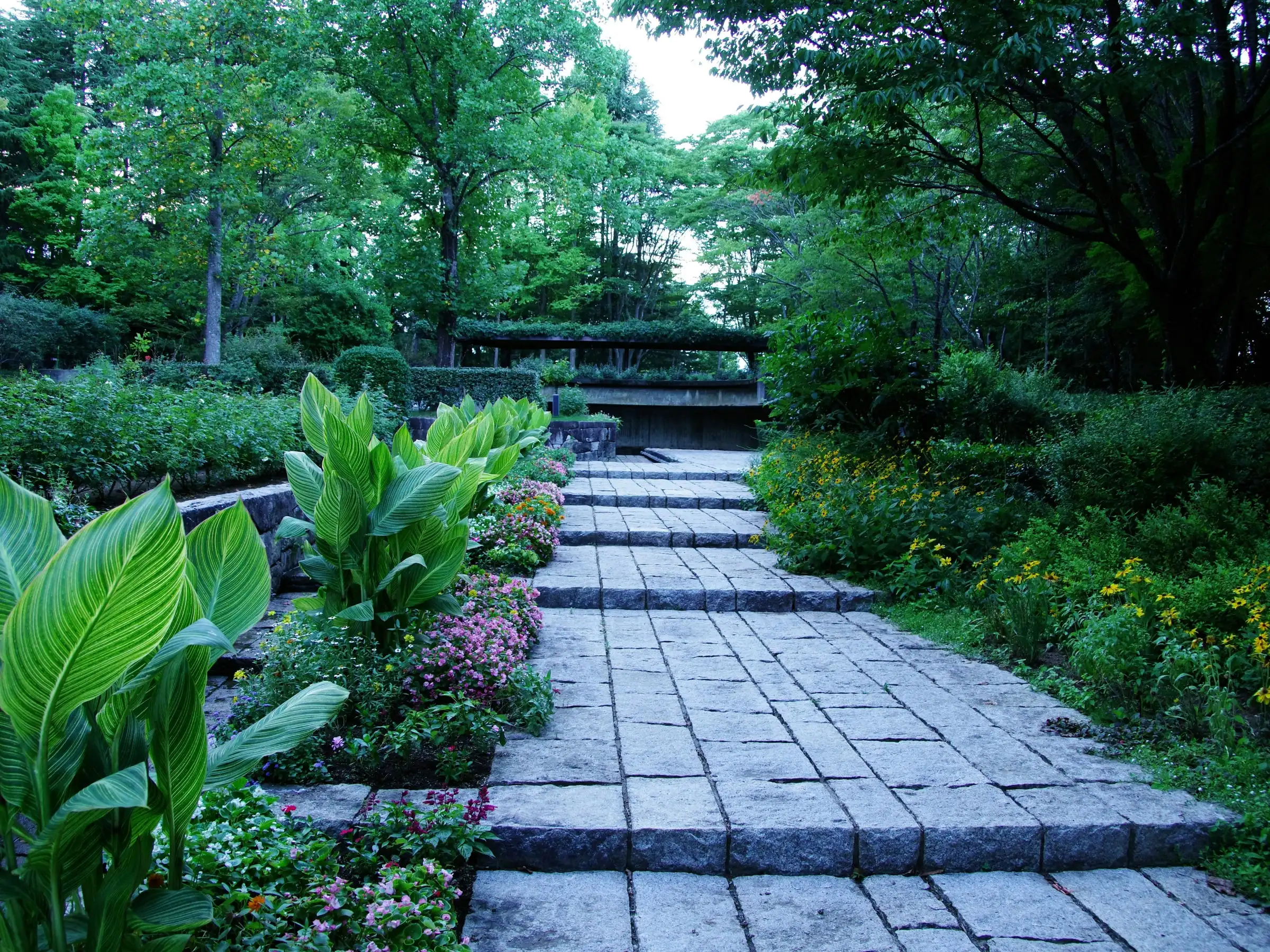
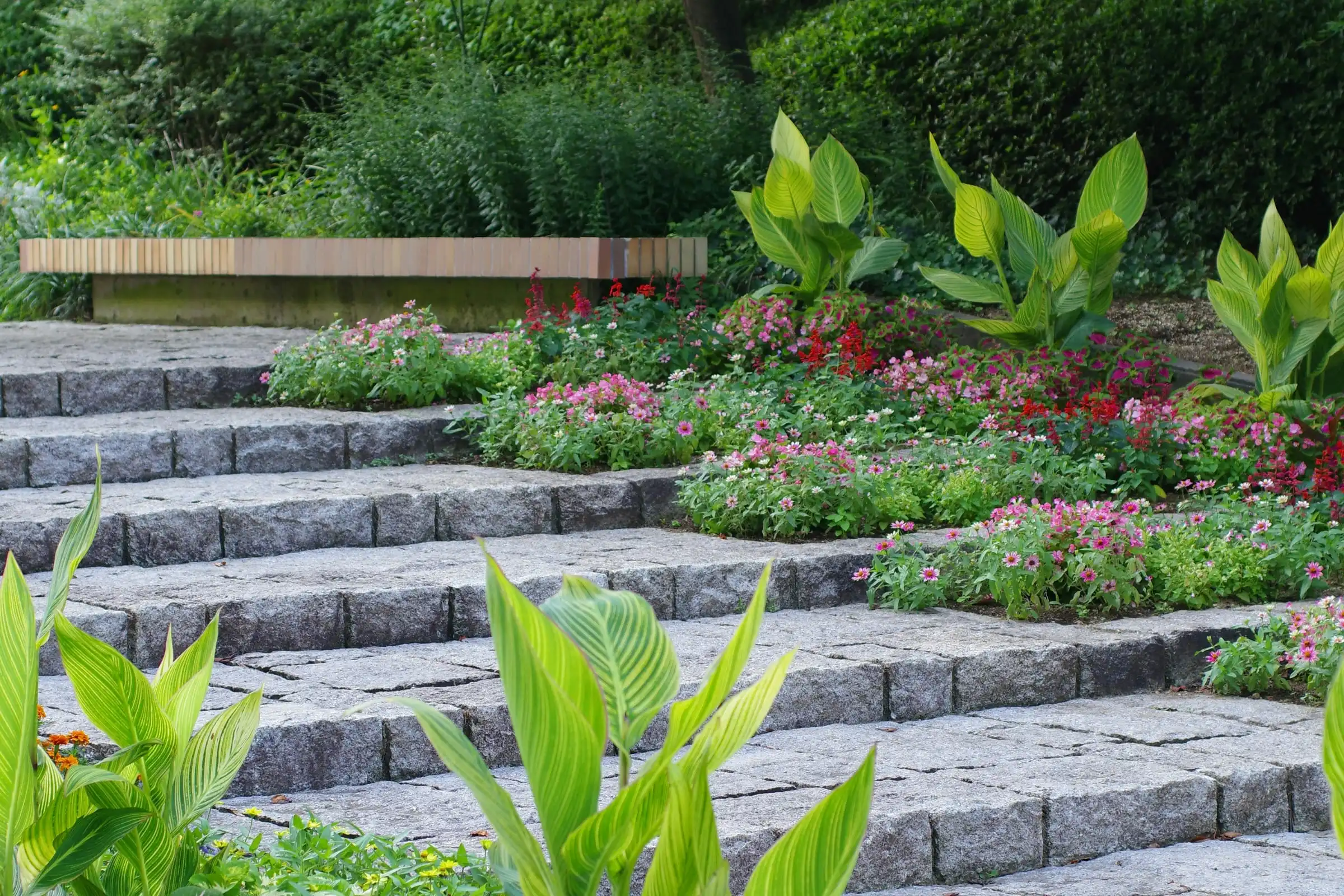
Where the yard changes level, we build steps into the paving in the same material, with risers at an even height so nobody trips on the odd one out. Where the change is bigger than a step or two, a low sandstone or block retaining wall holds the upper level and the paving runs along its base.
What's in your paving quote
Your quote lists the area in square metres, the paver and its finish, the excavation and the depth of base, the edging, the falls and where the water goes, any steps, the sealing if you want it, and the clean-up. It's a fixed price. If we dig up something nobody could have known about, like an old footing or a buried pipe, we stop and talk to you before anything changes. To see how paving sits against walls, turf and planting in a full backyard budget, read our landscaping cost guide.
Paving of any material is structural landscaping in NSW, and any job over $5,000 needs a contractor licence. Fernline's licence number is on every quote.
Paving: your questions
How much does paving cost in Newcastle?
As a guide from our own jobs, concrete pavers start from about $110 a square metre laid, and natural stone or porcelain runs $160 to $260 a square metre, + GST. Both prices include a compacted base and the drainage. Steps, tight access, digging out an old slab and lots of cuts around curves all add to it. The site visit and the quote are free.
Which pavers are best near the coast?
Porcelain is dense and takes up very little water, so salt spray and barbecue grease sit on the surface and wash off. Natural stone looks warmer and ages well, but sandstone in particular is porous, so near the beach we seal it and suggest a hose down now and then. Concrete pavers are the budget choice and handle salt fine if they're sealed.
Do you need a licence to lay paving in NSW?
Yes, for any paving job over $5,000 including GST in labour and materials. NSW Fair Trading lists paths and paving of any material as structural landscaping, which needs a contractor licence above that amount. Fernline Landscapes' licence number is on every page of this site and on your quote.
How long does a new patio take?
A paved patio is usually one to two weeks on site, from digging out to the final sweep of the joints. A garden path can be two or three days. A driveway takes longer because the base is deeper and has to be compacted in layers before a single paver goes down.
Why do pavers sink or go wavy?
Almost always it's what's underneath. If the base wasn't compacted, or water gets in under the pavers and has nowhere to go, the bedding washes away or the clay below swells and shrinks with the seasons. The pavers follow it. A deep, compacted base and a fall that sheds water stop it happening.
Can you lay new pavers over my old concrete?
Sometimes. If the slab is sound, isn't cracked and already falls away from the house, porcelain or thin stone can be glued straight onto it, which saves the cost of breaking it out. If water sits on it after rain, or laying on top would bring the patio up to your door sill, we take the slab out and start from a proper base.
Send us your garden
A few photos and a rough idea is enough. We'll ring to book a free site visit, then send a fixed quote with a drawing.