Landscaping Maryland, rebuilding older gardens on reactive clay
Most Maryland gardens went in years ago and have had a hard life on clay since. Fernline Landscapes replaces the worn-out walls, cracked paths and tired lawns, sixteen minutes from our Broadmeadow yard.
A Maryland garden isn't a blank block any more. Most of the job is deciding what's worth keeping.
Maryland is named after Mary Stephena Cowper, who married George Brooks in 1828, and the couple's 1,280-acre land grant stayed farmland until the suburb began to develop in the 1970s. Glendore Public School sits on Maryland Drive, and the streets have filled in around it. The ground is what every yard here has in common: a reactive soils research site was set up in Maryland in 1993, in a corridor described as moderately and highly reactive clay. Parts of the suburb run down to the edge of Hexham Swamp, and the Thomas Family Grave on Callan Avenue, listed on the State Heritage Register, is a reminder that the farms were here first.
Second-time gardens
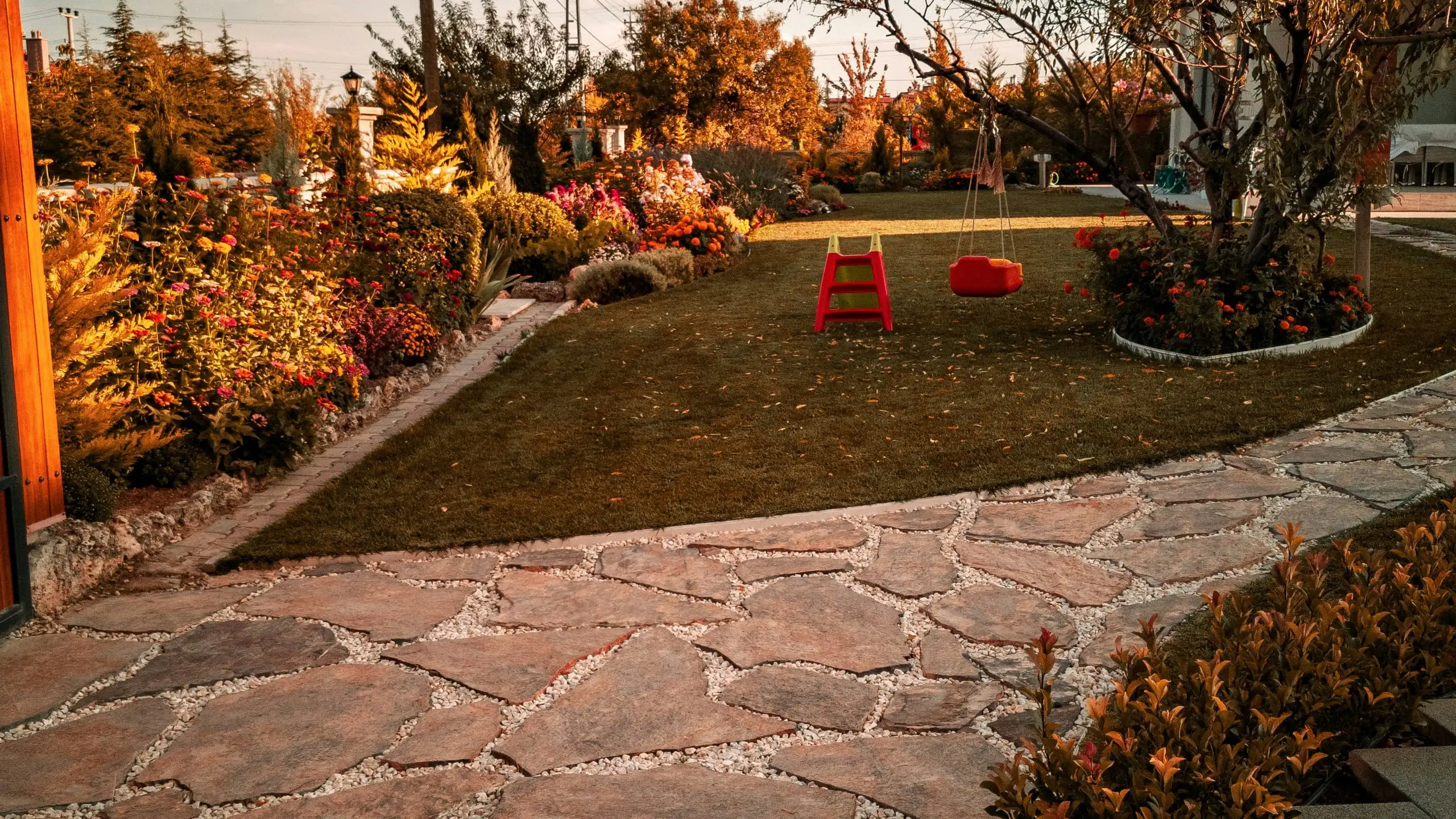
Most Maryland gardens aren't being built for the first time. Someone put them in when the house was new, and they did their job: the lawn got the kids through, the shrubs filled in, the timber wall held the bank. Decades later, the same garden is often the problem. The shrubs cover the windows, the sleepers are soft at the base, and the path to the clothesline has split in three places.
So your Maryland job usually starts with a walk around the yard, deciding together what stays. A healthy gum or jacaranda is worth designing around. A sound brick edge can stay where it is. Leaning walls, cracked concrete and plants that have outgrown the house usually go, and what replaces them is built for the next thirty years rather than the last.
Reactive clay under every yard
The ground in Maryland moves. A research site for reactive soils was set up here in 1993 because this corridor sits on moderately and highly reactive clay. It swells after a wet week and shrinks in a dry summer, and anything rigid on top of it moves too. That's why so many old paths in the suburb have cracks, and why so many sleeper walls lean.
Your new garden is built with that movement in mind. Pavers go on a compacted crushed-rock base, which flexes a little and can be relaid if a section drops. Walls get gravel and ag pipe behind them, so water doesn't build up in the clay and push. Beds are kept back from paths and the house, so watering doesn't soak one side of a slab and leave the other dry. The clay keeps moving, and the paving, walls and beds are built to ride that movement without breaking.
Yards on the wetland and bush edges
Parts of Maryland run down to the edge of Hexham Swamp, one of the largest freshwater wetlands on the New South Wales coast, and other parts back onto bushland. Those yards need a little more thought. Boundary planting should be local natives that won't seed into the wetland or the reserve, and the lowest corner of the yard needs somewhere for storm water to go. Some of those edges are mapped as bush fire prone land too, so we check the map for your address before choosing what goes close to the house.
From our Broadmeadow yard it's about sixteen minutes out Newcastle Road and Minmi Road, so the crew can be on your site early and still collect materials mid-job without losing the day.
What we build in Maryland
The old timber wall along the side had gone soft and was leaning. The new block wall has gravel and pipe behind it, and the path beside it hasn't cracked since.
Leanne, Maryland · Sample review
01
Replacing old sleeper walls
Timber walls from the original landscaping that have gone soft or leant out, rebuilt in block or concrete sleepers with drainage behind, so the clay can't push them over again.
Old concrete that's split and tilted as the clay moved, replaced with pavers on a compacted base that can flex a little and be relaid if the ground shifts.
Shrubs covering the windows, roots lifting the paving, beds gone to weed. The trees worth keeping stay, the rest is cleared, and the new planting is chosen for the next twenty years.
Our Maryland concrete path keeps cracking. Is it the clay?
Usually, yes. The clay swells after rain and shrinks in a dry spell, and a long path with no control joints cracks where it's weakest. We either relay it as pavers on a compacted base, which tolerates the movement, or pour new concrete with joints and keep garden beds and downpipe water away from its edges so the ground under it stays more even.
Is it worth saving the old timber sleeper wall in our backyard?
If the sleepers are soft, split or leaning, no. Patching a failing timber wall buys a year or two at most. If it's straight and the timber is sound, we can add drainage behind it and leave it alone. On the site visit we'll show you which sleepers have gone and which haven't.
Can you work around our big established trees?
Yes, and a healthy tree is usually worth keeping. We dig by hand near the main roots, keep new walls and paving outside the root zone where we can, and tell you if a tree is what's lifting your path. If a tree should come out, we get an arborist's view and check whether it needs council approval first.
Our lawn is patchy and full of weeds. Can you renovate it rather than replace it?
Sometimes. If it's a running grass like kikuyu or couch and the soil is just compacted, we aerate, top-dress and feed it, and it comes back within a season. If it's mostly weed, or the clay underneath stays waterlogged, new turf on a proper soil base is the better money. Either way the drainage gets fixed first.
Can you make the front of an older Maryland house look up to date?
Yes. Many front yards here still have the original layout: a concrete path, a strip of lawn and a row of shrubs under the windows. A new path in pavers or exposed aggregate, a lower hedge and a few strong plants change the look of a brick house more than anything else for the money.
Do we need approval to replace a retaining wall in Maryland?
A low wall can often be replaced as exempt development under the state's Codes SEPP, which covers walls up to 600mm that meet its conditions. Taller walls, walls on a boundary, or walls holding up a driveway or a house need an engineer and usually approval. In NSW, structural landscaping over $5,000 also needs a licensed contractor, which we are.
Send us your garden
A few photos and a rough idea is enough. We'll ring to book a free site visit, then send a fixed quote with a drawing.